TEST CENTER SOFTWARE


Discover Test Center, the universal software for testing STEP Lab systems. Designed to simplify every stage of mechanical testing, Test Center allows you to customise every detail, capture data in real time and ensure results always meet the highest standards.
All this with the support of an intuitive interface that makes the experience even easier and smoother.

TEST CENTER SOFTWARE
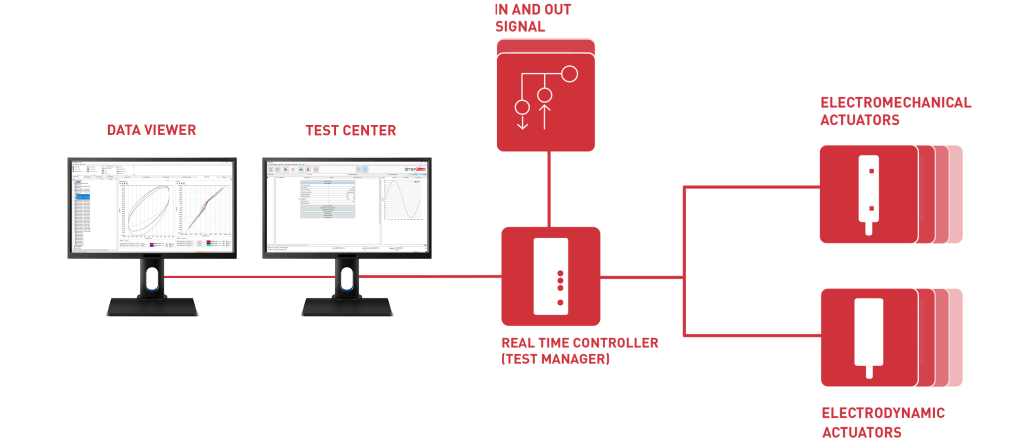
Discover Test Center, the universal software for testing STEP Lab systems. Designed to simplify every stage of mechanical testing, Test Center allows you to customise every detail, capture data in real time and ensure results always meet the highest standards.
All this with the support of an intuitive interface that makes the experience even easier and smoother.

Static and dynamic test management

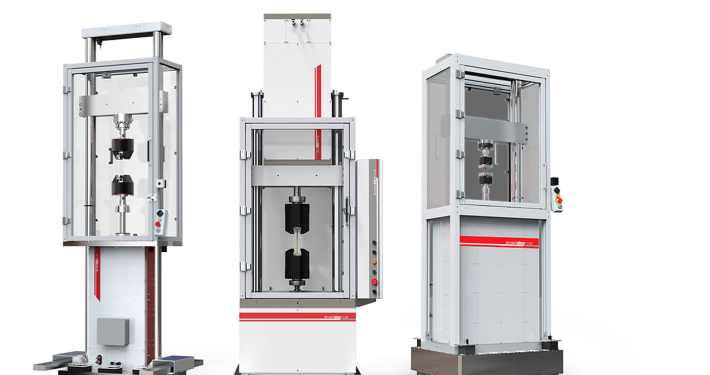
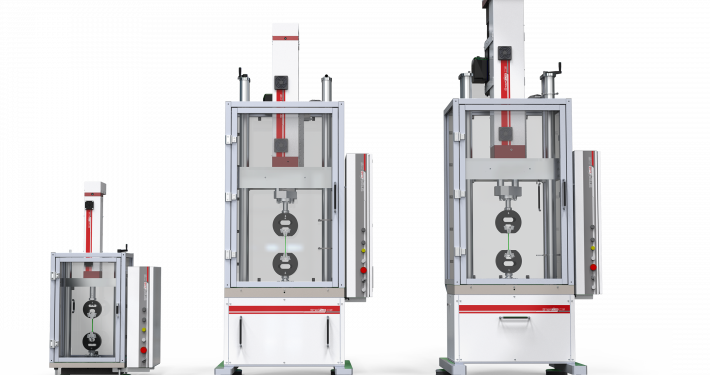
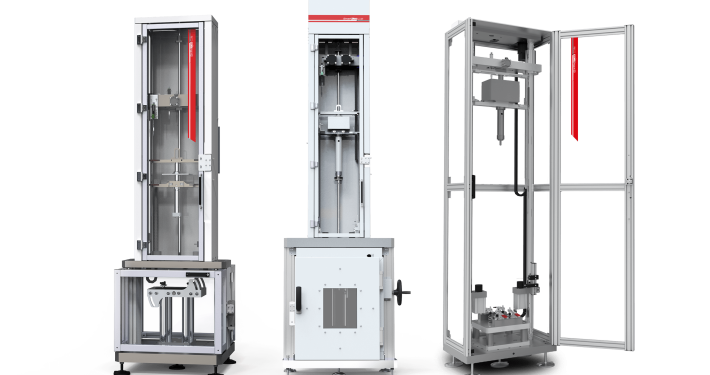
Test Center is our comprehensive management software for the entire range of STEP Lab test machines, offering a single integrated and flexible solution for accessing test configuration and management. With Test Center, you can conduct material and/or product characterisation to validate mechanical performance, perform component tests to ensure quality or comply with regulations, conduct static structural analyses to support design, and fatigue strength tests to determine product life cycle.

SOFTWARE FEATURES

Advanced customisation of test parameters and physical characteristics of samples.

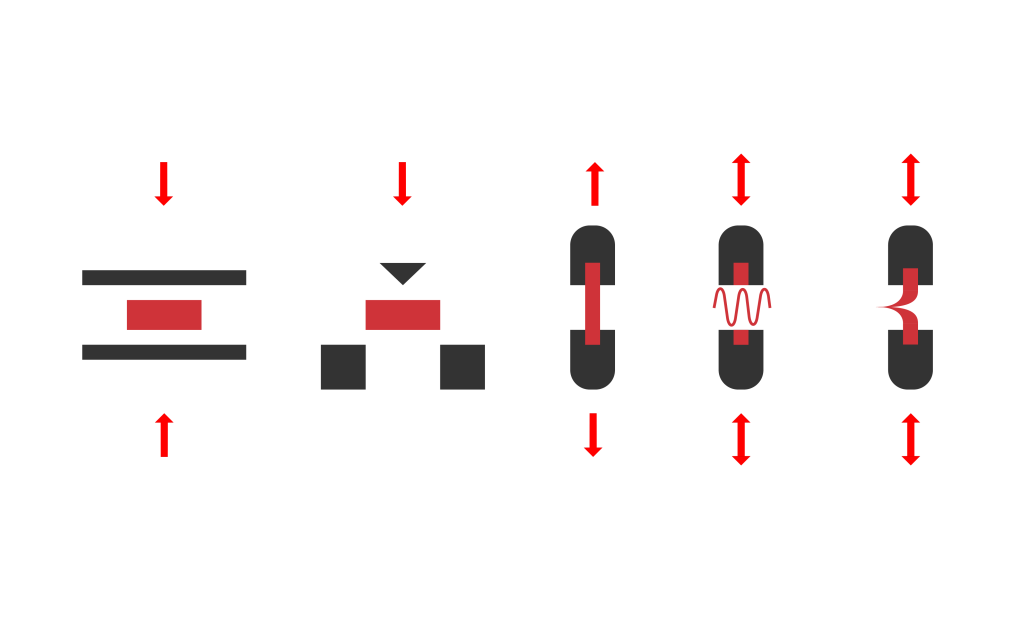
TestCenter offers the possibility to configure static (traction, compression, bending) and dynamic (impact, cyclic) tests.

Configuration of the sequence of test actions at the user’s discretion to meet any customisation requirements.

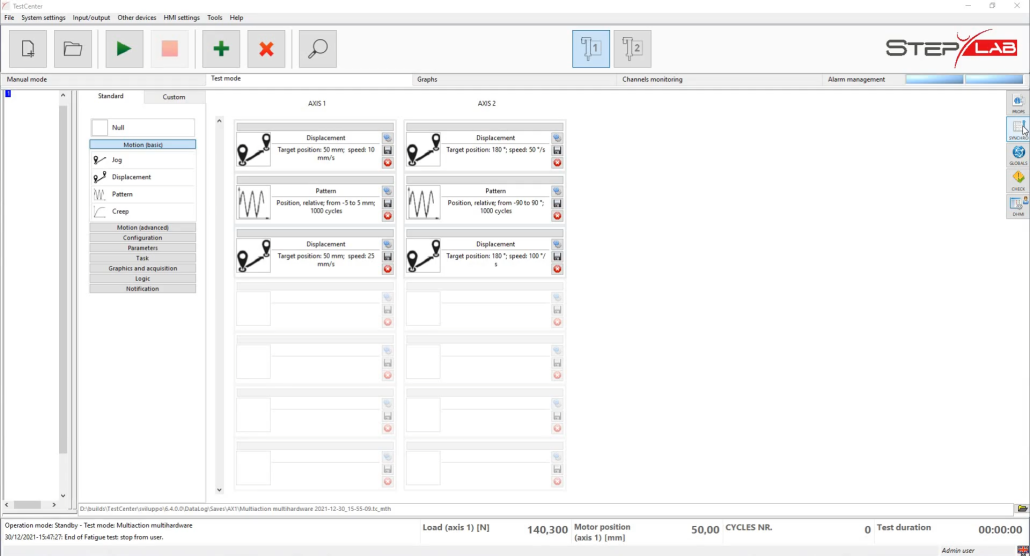
In addition to common single-axis tests, possibility to prepare multi-axis tests.

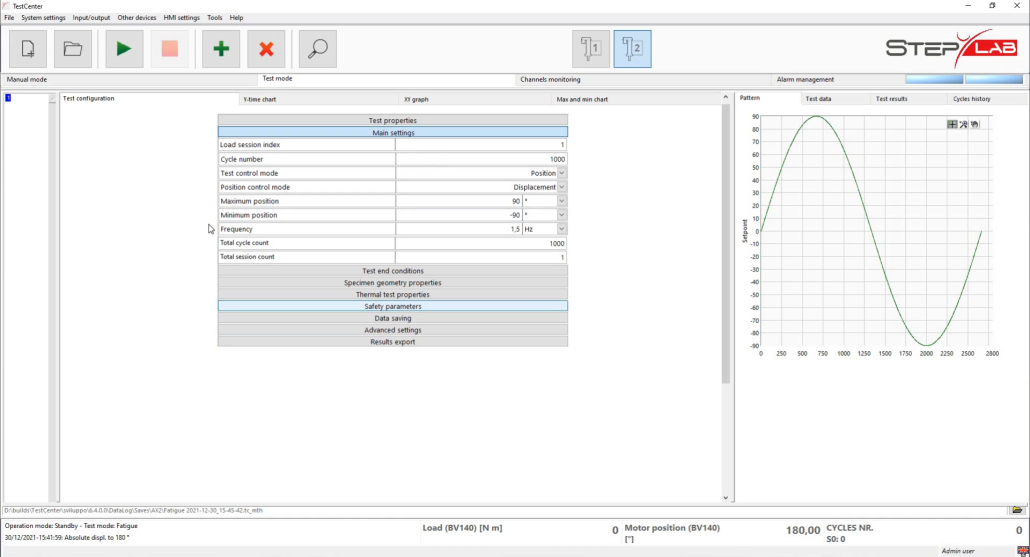
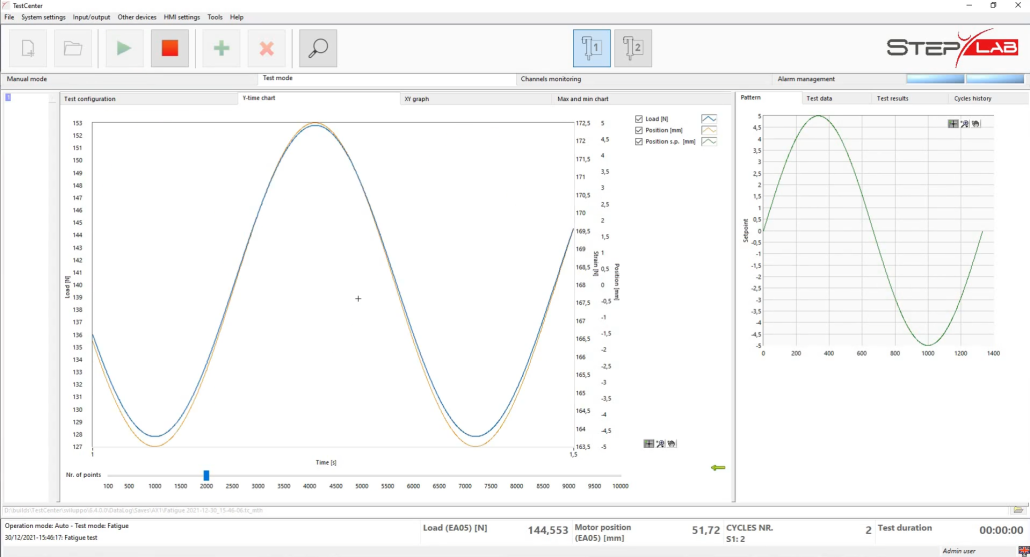
Configuration of cyclic tests in displacement or force control.

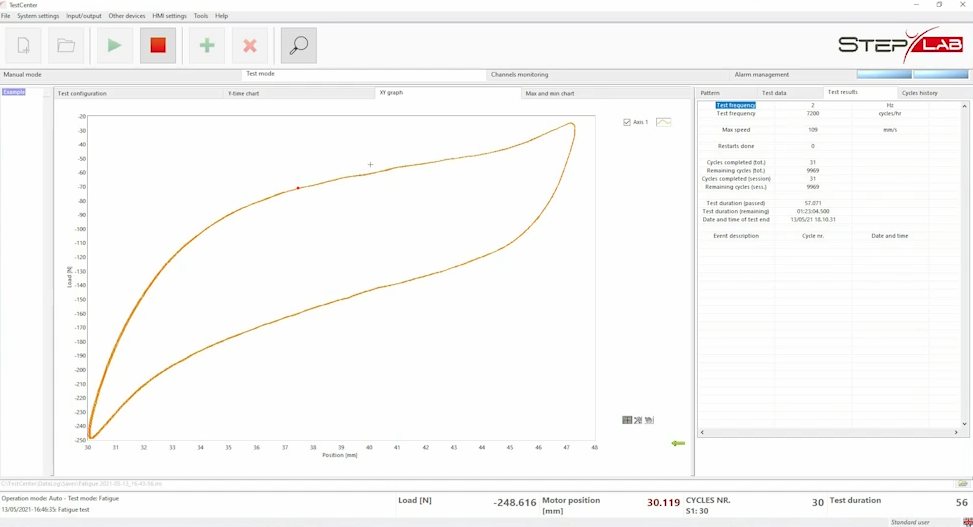
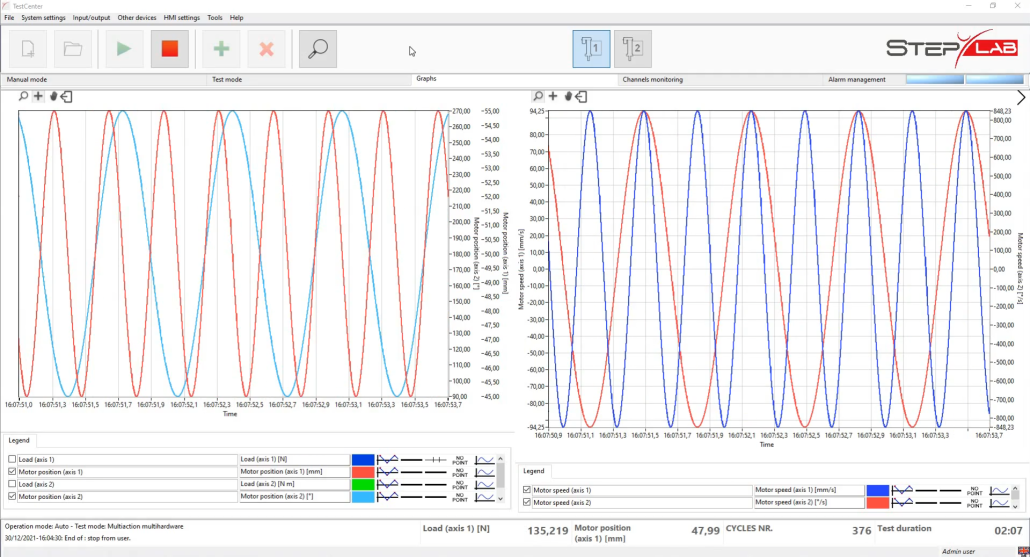
Real-time display of quantities and graphs with test curves.

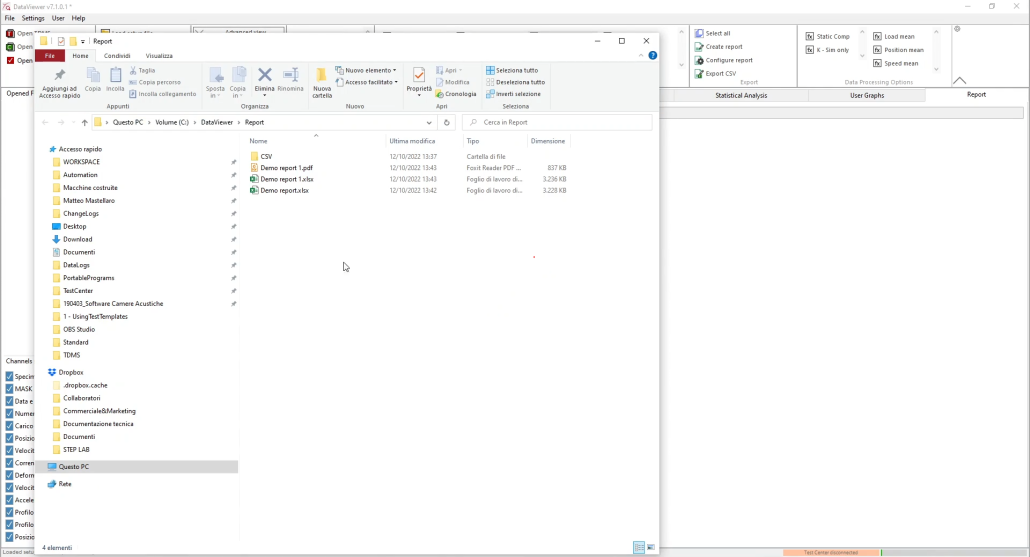
Features for quick report creation and customisation of preconfigured sets and data export in Microsoft Word, Excel and PDF formats.

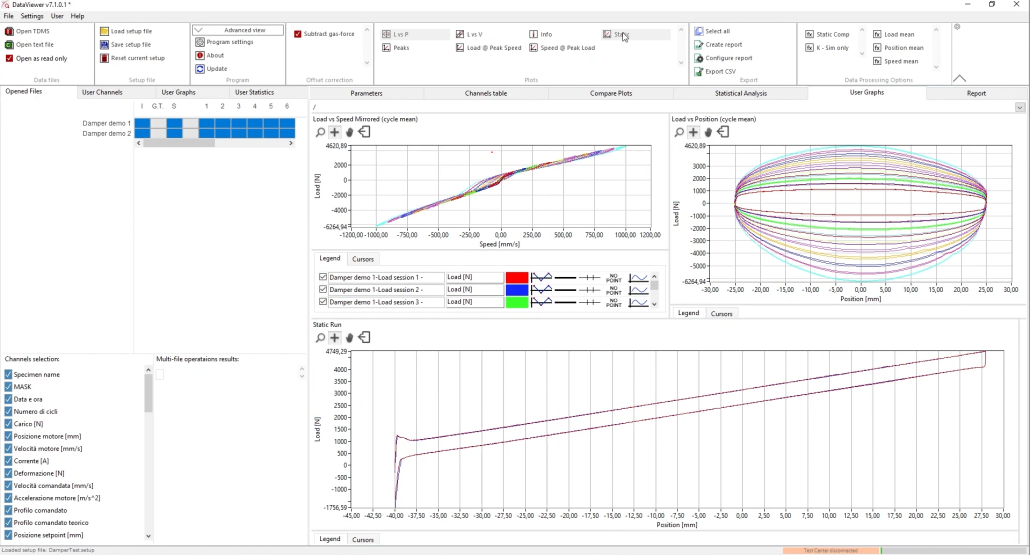
Post-processing of acquired data and display of summary tables of results.
Functionality to select the tests performed from the history and compare the results.

AVAILABLE TEST MODULES

The Test Center software is compatible with numerous test modules to meet the specific requirements of mechanical testing:

Control module for static mechanical tests of tension, compression or creep. Software for managing tests with precision and according to major international standards. The programme is organised to offer you editable presets of the most common tests or allow you to quickly customise your test.

  • Data and screen acquisition
  • Performance testing (basic and advanced)
    • Sinusoidal
    • Ramp
    • Sine-on-Sine
    • Ramp-on-Ramp
    • Cyclic blocking.
    • User-defined profiles
    • Waveform compensation – peak valley compensation, amplitude phase control, peak valley phase.Resistance testing with water cooling, side loading, and a full set of waveforms:
  • Reporting and analysis.
    Functions of the analysis graph:

    • Force vs. displacement
    • Force vs. speed
    • Gas force vs. displacement
    • Peak force at peak speed
    • Force at peak speed
    • Speed at peak force
    • Displacement vs. time
    • Strength vs. time
    • Speed vs. time
    • Condition vs. time
    • Peak force vs. temperature
    • Combined time-displacement-speed
    • Test results
  • Quality Assurance Testing

Deformation analysis over time.

  • HCF (High Cycle Fatigue): STEP Lab provides high cycle fatigue (HCF) services that can help determine the fatigue resistance of a particular material through a variety of tests, including but not limited to:
    • Axial fatigue (ASTM E466)
    • 3-point bending fatigue
    • 4-point bending fatigue
    • Overhanging fatigue
    • Rotating beam fatigue (RR Moore style)
  • LCF (Low Cycle Fatigue): The low cycle fatigue test is normally performed in strain control with load as the dependent variable.
    The deformation variables usually defined by the customer are:

    • Wave Shape (triangular/sinusoidal/trapezoidal)
    • Frequency (Hz, opm, strain rate = strain%/sec)
    • Maximum Target Strain o Strain Range (%)
    • A-Ratio (amplitude/mean) o R-Ratio (minimum/maximum)
    • Switch Point(When the specimen switches from strain control to load control – increasing frequency)
    • Discontinue Test(Specified cycle count, at which point the test is terminated)

For complex dynamic tests.

STEP Lab Damper Testing software enables a full range of damper performance testing requirements, from basic to advanced.

  • Data acquisition and screen:
    • Samples the specified strength, length and phase relationship of the input signals
    • Calculate and display nine fundamental properties: K*, K‘, K’, Phase, Tan Delta, Damping, Total Energy, Displacement and Load Amplitude
    • Supports limit control to trigger appropriate actions
    • PWM channel management for active dampers.
  • For basic performance tests, just click on a few configuration windows:
    • Selects the waveform required to excite the sample
    • Defines the number of test cycles
    • Set the number of data collection cycles
    • Select the test results to be displayed
  • For advanced performance testing, the software allows easy modification of the type and form of excitation applied to the sample:
    • Change the frequency or speed of the cycle
    • Defines final levels
    • Creates complex and integrated excitation passages
  • Incremental temperature test: predefines the temperatures at which performance data are acquired to accurately simulate shock absorber performance in real working environments
  • Temperature monitoring: measures the temperature of the sample during the test
  • Side load: applies a controlled force on a sample to simulate field conditions more accurately
  • Speed conservation: achieves precise final sinusoidal velocity levels

It conducts dynamic characterisation of viscoelastic materials or components over a wide range of variables with up to four simultaneous control channels.

  • Measure dynamic stiffness (K), phase angle, damping (C), modulus (E or G), delta tan
  • Performs frequency, dynamic amplitude, and average level characterizations on systems with a single dynamic channel
  • Scan individual variables for average level, dynamic amplitude, frequency, temperature, or phase relationship between control channels
  • Combine several scans in one test
  • It performs phase-dependent characterizations between dynamic channels on systems with more than one dynamic channel.
  • Performs characterisations as a function of temperature set point
  • Includes automatic measurement and correction of dynamic system errors induced by transducers and electronics

Dedicated tests for springs.

For real-time calculations and tolerance evaluation in high-speed production.

  • Dynamic Characterisation: Conducts dynamic characterisation of viscoelastic materials or components over a wide range of variables with up to four simultaneous control channels.
  • Quality Control
  • Developed for shock absorbers, the EOL software provides efficient configuration and runtime of speed-based tests, easy identification of sample failures and a variety of methods to graphically represent and report results.
    • Functionalities:
      • Set parking, test and pick-up positions and define customised pre-cycles and speeds
      • Conducts gas force tests (including user-configurable upper/lower limits and waveform points)
      • Defines up to three different test speeds at various cyclic amplitudes
      • Predefines operational limits or calculates them from the statistical average of the parts in a new batch run
      • Displays diagnostic data on a user-configurable screen with fault indication
      • Adds data to existing batches or collects and analyses in new batch files
      • Performs statistical analysis at the end of each batch file

For advanced hardware/software integration.

Point-by-point testing and peaks history.

Developed to specific customer requirements.

ADDITIONAL FUNCTIONALITIES

Our Test Center software also has the following functionality:

  • Possibility to integrate third-party acquisition modules, such as HBM for strain gauge acquisition or National Instruments for analogue acquisition with high sampling rates.
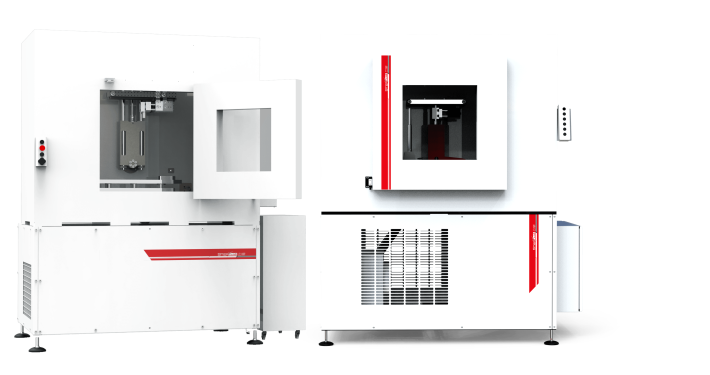
  • Test management in non-ambient operating conditions by adding climatic cells to the system.
  • Undoing the effects of pre-tensioning during specimen fixing (Precarious Reset).

Accuracy

Synchronised

Simple and intuitive operation

Versatility

MULTI-AXIS TEST MANAGEMENT

In addition to common uniaxial tests, the possibility of multi-axial testing

MANAGEMENT OF CYCLIC TESTS

Configuration of cyclic tests in displacement control or force control

Explore our catalogue or contact us to find the right product for your business together.

OTHER PRODUCTS