
Fundamentals of Impact Testing
Impact testing applies a load to a specimen at high speed and measures how it responds. In a drop weight test, a mass is released from a set height and strikes the sample through a striker (tup), converting potential energy into impact energy at the moment of contact.
Two variables define the test: the mass of the falling weight and the drop height. Since plastics and composites are rate-sensitive, the same impact energy delivered at different combinations of mass and velocity can produce different failure behavior. This is why drop height, weight, and impact velocity all need to be controlled and repeatable, not just the final energy value.
Impact testing is used to evaluate how a material or component absorbs energy and whether it fails under a defined, standardized impact event, on everything from raw materials to finished products.
Pass/Fail vs Instrumented Testing
- Pass/fail (Non-instrumented) testing answers a simple question: did the sample survive? A weight is dropped from a set height, and the outcome is recorded as broken or not broken. It’s fast, straightforward, and well suited to routine compliance checks where a single go/no-go result is all that’s needed.
- Instrumented testing goes further. By adding sensors for force and velocity at the point of impact, the system can capture the full force-time and displacement history throughout the entire event, not just its outcome. Instead of one number, you get a complete curve showing how load built up, how much energy was absorbed, and at what point failure began.
Why the difference matters in practice
Take a composite panel subjected to an impact. Composites can fail internally, delamination, matrix cracking, fiber breakage, while showing no visible damage on the surface. A pass/fail test would record it as a pass. An instrumented test, by capturing the force-displacement curve, can reveal the energy absorption anomaly that signals internal damage, even when nothing is visible externally.
This is the same reasoning that has pushed instrumented testing to become standard practice in sectors like automotive and aerospace, where a component that looks intact isn’t always structurally sound.
| Pass/Fail Testing | Instrumented Testing | |
|---|---|---|
| Output | Single result: broken / not broken | Full force-time, displacement, and energy curve |
| Speed | Fast, minimal setup | Requires sensors and data acquisition |
| Best for | Routine compliance, factory floor QC | R&D, failure analysis, material characterization |
| Detects internal damage | No | Yes |
| Typical use case | Standard batch quality control | Product development, root-cause analysis |
Which One Do You Need?
- Need a fast, repeatable compliance check? Pass/fail testing is enough.
- Need to understand how and why a component fails, or characterize a new material? Instrumented testing gives you the data to do it.
- Not sure yet? Many test programs start with instrumented testing during development, then move to pass/fail for ongoing production QC once acceptance criteria are established.
Relevant Standards
Several international standards define impact test methods that can be run in either pass/fail or instrumented mode, depending on the level of detail required:
- ASTM D7136 — damage resistance of fiber-reinforced polymer composites to a drop-weight impact event, widely used for aerospace and automotive composite panels.
- ISO 6603-2 / ASTM D3763 — multiaxial instrumented impact testing of plastics, using a puncture-type impact on a clamped specimen.
- ISO 8256 — tensile-impact testing of plastics for mono-axial specimen configurations.
Each standard specifies impactor geometry, specimen clamping, and acceptable impact velocity ranges, but instrumentation level is often a matter of what your test program requires, not just what the standard mandates.
STEP Lab Testing Solutions
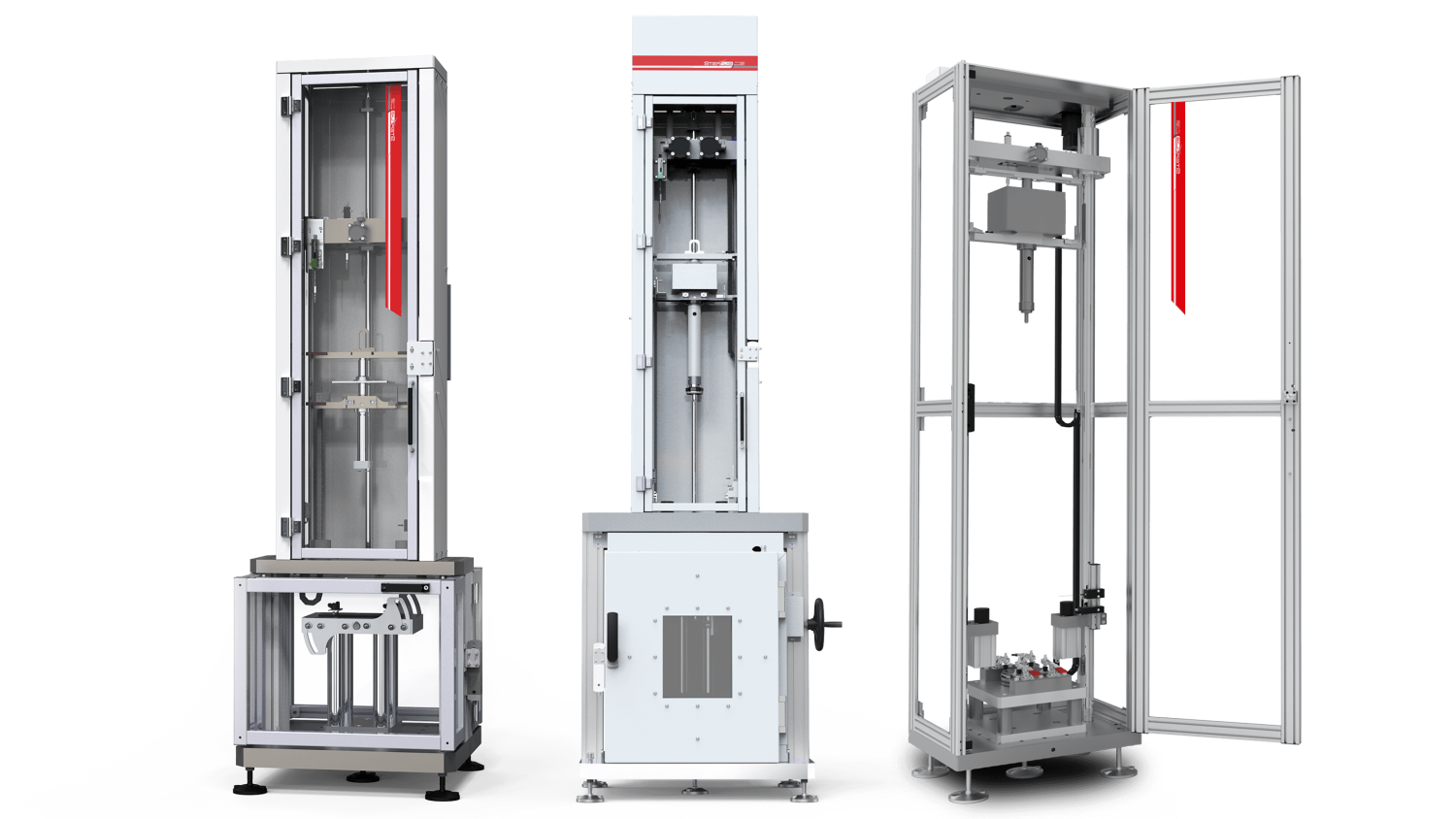
STEP Lab’s drop weight towers (DW750/DW1000/DW2000) are designed to run both pass/fail and instrumented tests on the same platform. Impact energy is adjustable from 5 to 2000 J, impact velocity up to 20 m/s, covering a wide range of materials, components, and finished products.
Key features across the range:
- Instrumented and non-instrumented test modes on the same machine
- Optional climatic chamber (DW1000, DW2000) for impact testing at controlled temperatures
- Optional acceleration system to extend impact velocity beyond free-fall values
- Dedicated supports and impactors for multi-axial and mono-axial test configurations
- Full customization to match specific standards, specimen geometries, or production requirements
Whether you’re running routine batch compliance or investigating a failure mode down to the millisecond, the same drop tower platform adapts to both.
FAQ
What is the difference between instrumented and non-instrumented impact testing?
Non-instrumented testing only records whether a sample broke. Instrumented testing adds force and velocity sensors to capture the full force-time and energy curve throughout the impact event.
Can internal damage occur without visible external damage?
Yes. This is common in composite materials, where impact can cause internal delamination or fiber breakage while the surface remains visibly intact.
Do I need instrumented testing for standard compliance checks?
Not necessarily. Many compliance checks only require a pass/fail result. Instrumented testing becomes valuable when you need to understand failure mechanisms or characterize material behavior.
Which standards use drop weight impact testing?
Common standards include ASTM D7136, ISO 6603-2, ASTM D3763, and ISO 8256, each covering different specimen configurations and applications.
Can the same machine run both types of test?
Yes. STEP Lab’s DW750, DW1000, and DW2000 towers are built to support both pass/fail and instrumented testing, with configurations customizable to specific standards and applications.
Contact Us
Not sure which configuration fits your test protocol? Get in touch with our team to discuss your application.