
STEP Lab’s 4-Corner HiL system in action with Vi-grade driving simulator
What happens when you connect four real dampers directly into a driving simulator? The answer is now on YouTube, and it shows exactly what STEP Lab’s Hardware-in-the-Loop testing capabilities look like in practice.
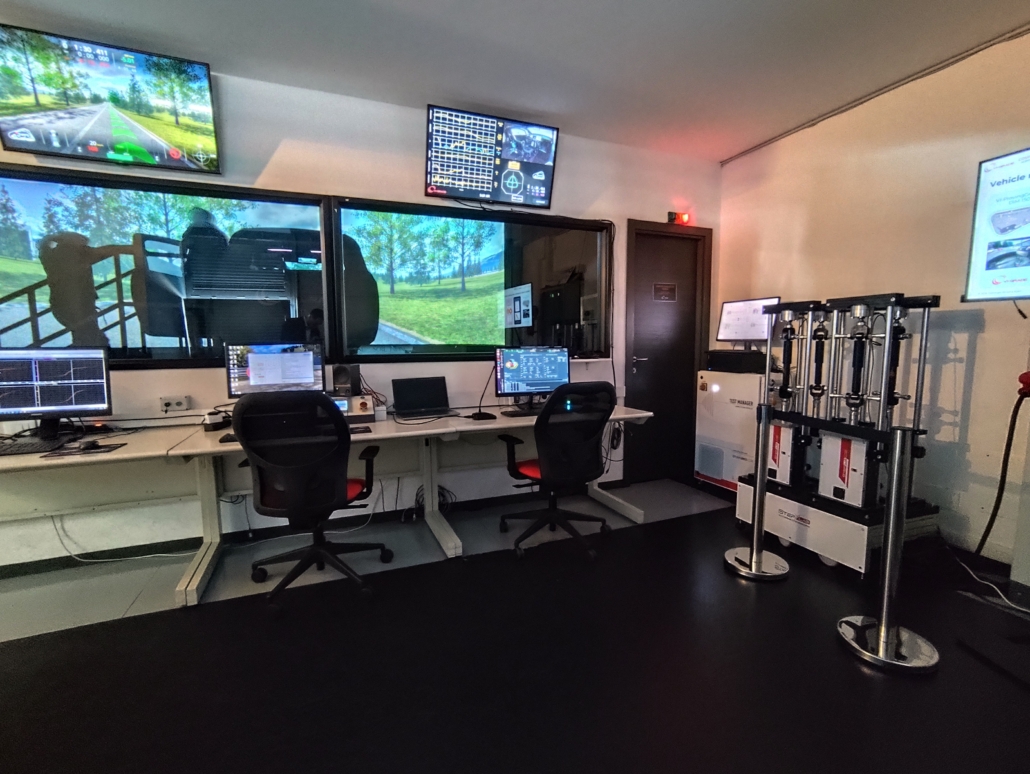
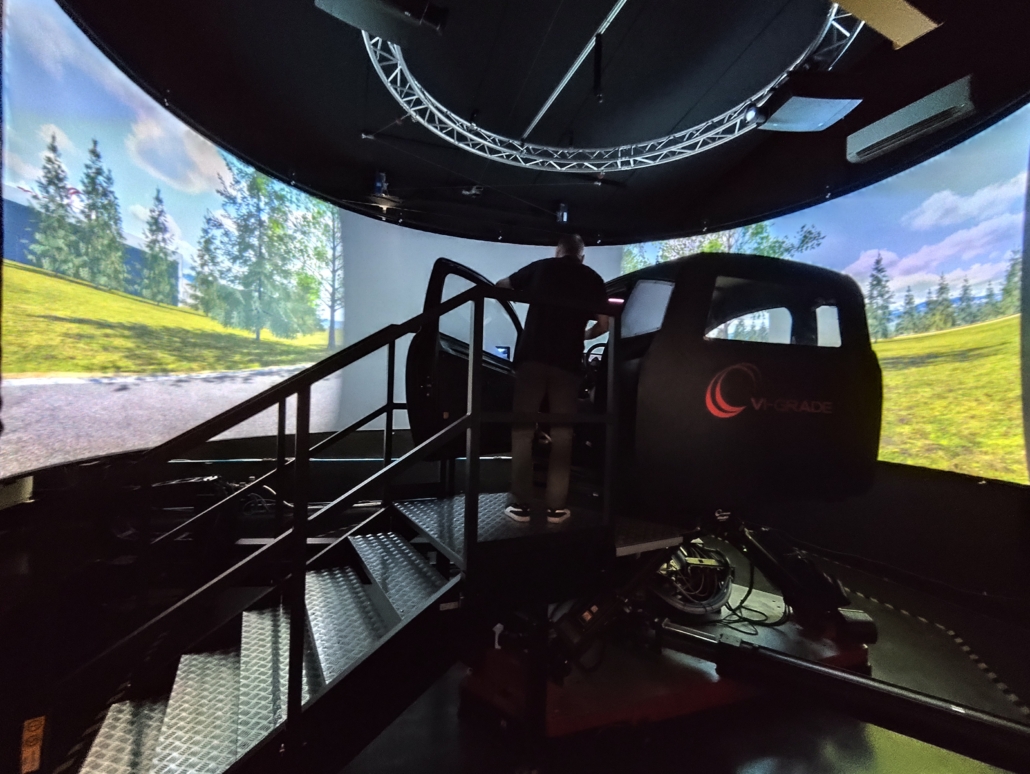
The video features a live driving session on the DiM150 simulator, with STEP Lab’s 4-Corner Damper-in-the-Loop system, VI-CarRealTime as the vehicle dynamics engine, FTire for tire modelling, and an AI-based damper model developed by Astemo. The result is a complete, closed-loop environment where a driver experiences realistic vehicle dynamics and real dampers do the work.
Four actuators, One loop
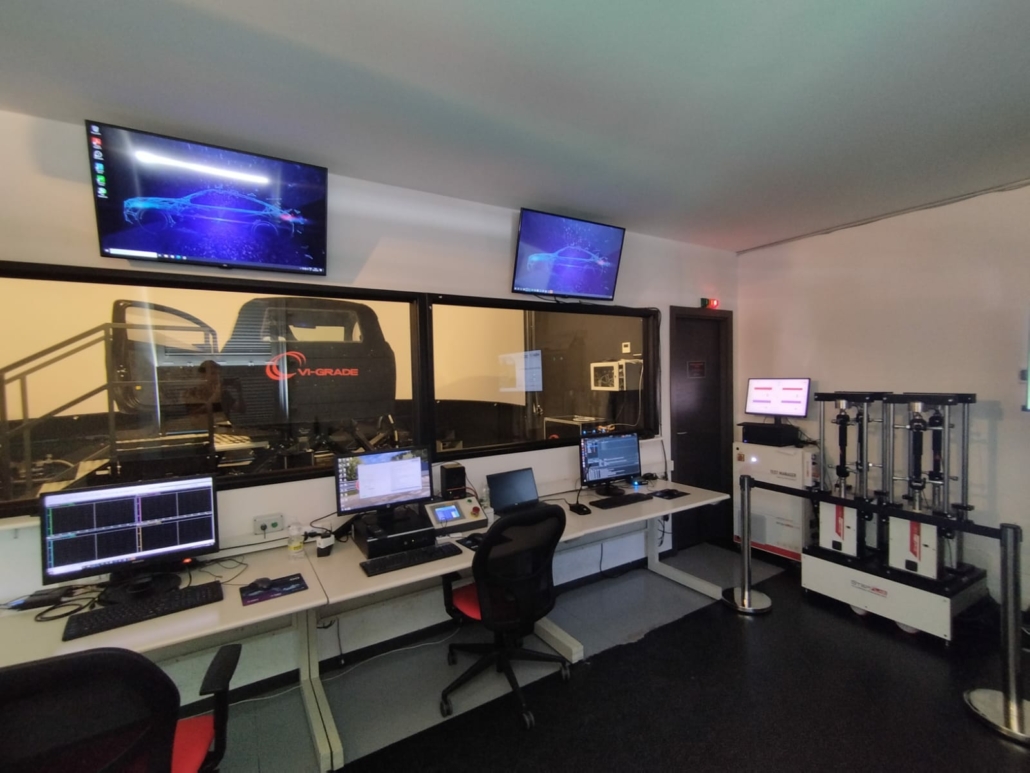
The 4-Corner Damper-in-the-Loop system is built around four electrodynamic actuators UD01, one per wheel position. Each actuator independently drives a physical damper, reproducing in real time the wheel-specific inputs calculated by the vehicle dynamics solver running in the simulator.
This is not a static endurance test or a pre-programmed waveform cycle. The UD01 actuators respond to live simulation data: as the driver steers, brakes and accelerates inside the Vi-grade DiM150, the vehicle model computes what each wheel is doing, and STEP Lab’s system physically exercises the corresponding damper at that exact instant. Force and displacement data measured on the real hardware feed straight back into the simulation loop, closing the circuit between the virtual vehicle and the physical components.
The electrodynamic architecture gives it the bandwidth and dynamic precision that real-time HiL applications require, making it one of the most capable platforms available for this kind of damper testing.
Hardware-in-the-Loop for damper development: Why it matters
STEP Lab’s HiL approach addresses a fundamental challenge in damper development: how do you evaluate real component behaviour before the full vehicle exists?
Pure simulation is fast but limited, a model is only as good as its parameters. Full vehicle testing on a proving ground is accurate but slow, expensive and available only late in the development cycle. STEP Lab system offers a third path: physical dampers tested under realistic, dynamically computed loads, integrated into a simulation environment that includes the full vehicle model and high-fidelity tire dynamics.
This means engineers can run meaningful damper evaluations, including subjective driver feedback, much earlier in the program, with actual hardware in the loop rather than a simplified model standing in for it.
Vi-grade and STEP Lab together
As mentioned, the STEP Lab system is only one part of the whole. The complete analysis is, in fact, made possible by integrating the 4-Corner with Vi-grade technology. The DiM150 driving simulator runs VI-CarRealTime, part of the VI-grade platform, with whom STEP Lab has an established partnership, as the real-time vehicle dynamics solver. Tire behaviour is handled by FTire from cosin scientific, one of the most accurate tire models available for vehicle dynamics applications. And Astemo contributes both the Nissan Ariya vehicle model and an AI-based damper model, which in the demo runs alongside STEP Lab’s hardware as a complementary approach, showing how software and physical test methods can coexist in the same framework.
The combination reflects how STEP Lab positions its systems: not as standalone test benches, but as components of an integrated development environment that connects seamlessly with the tools and workflows engineers already use.
Want to know more about STEP Lab’s 4-Corner Damper-in-the-Loop system or HiL testing capabilities?