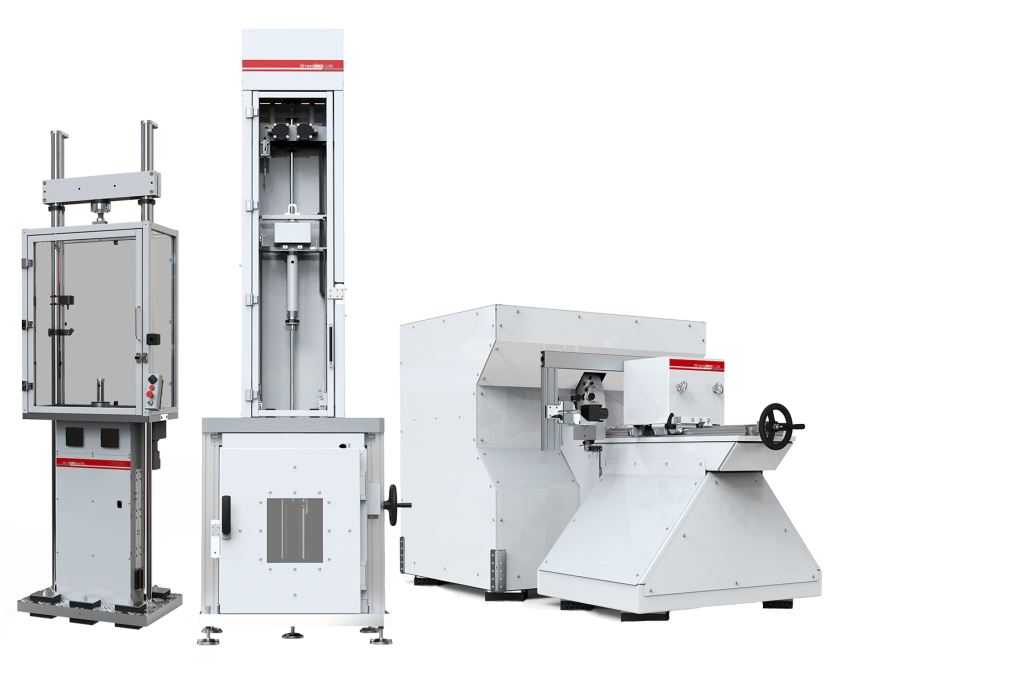
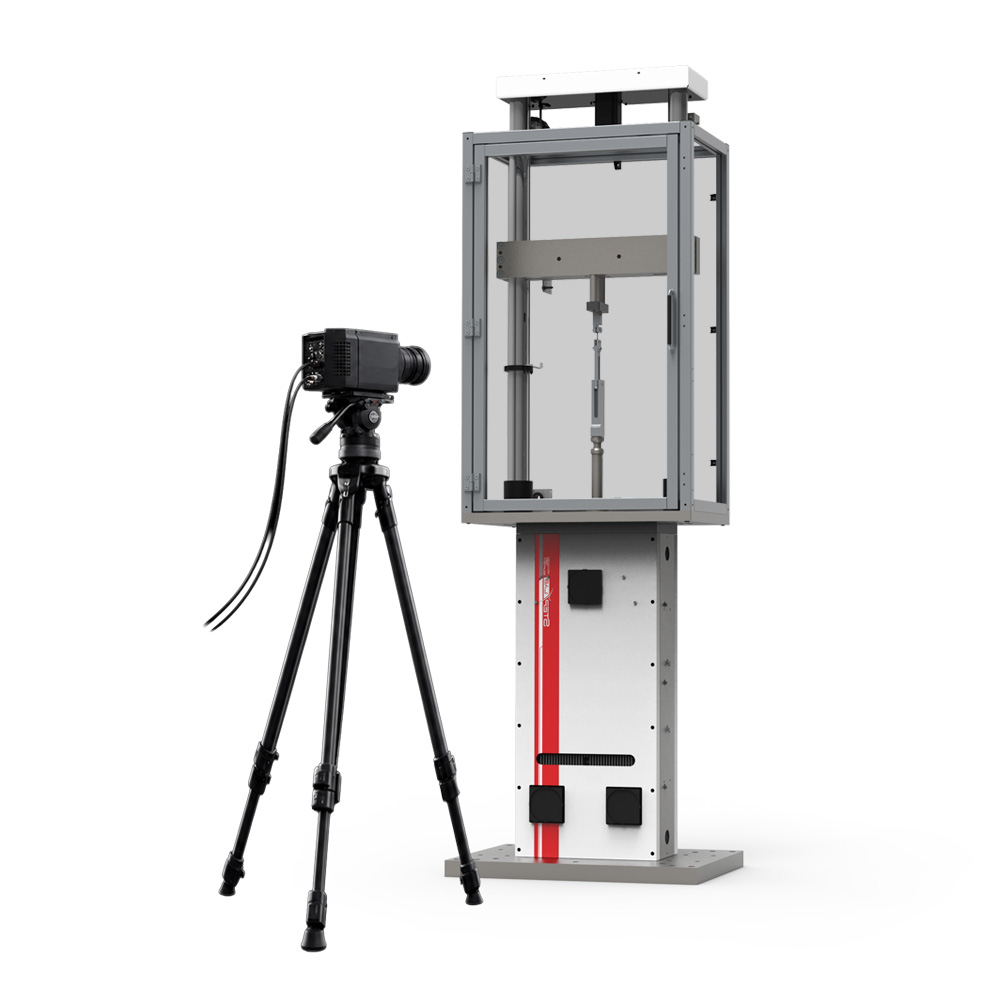
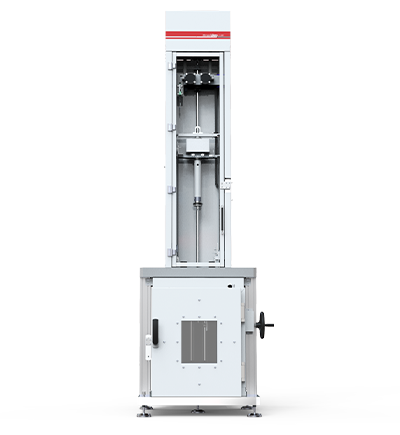
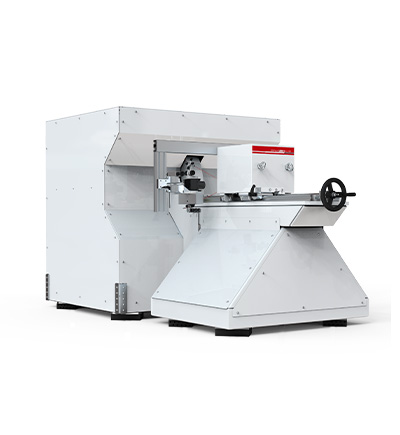
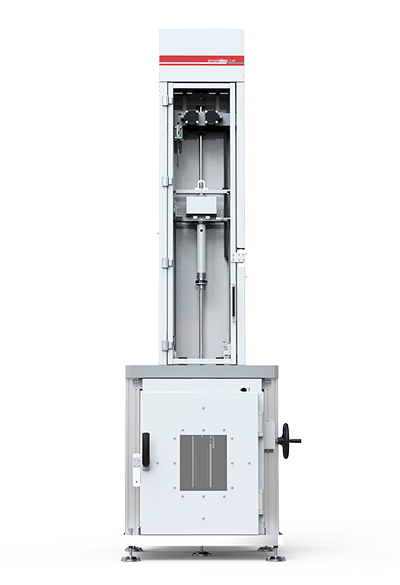
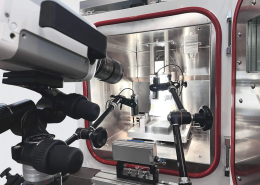
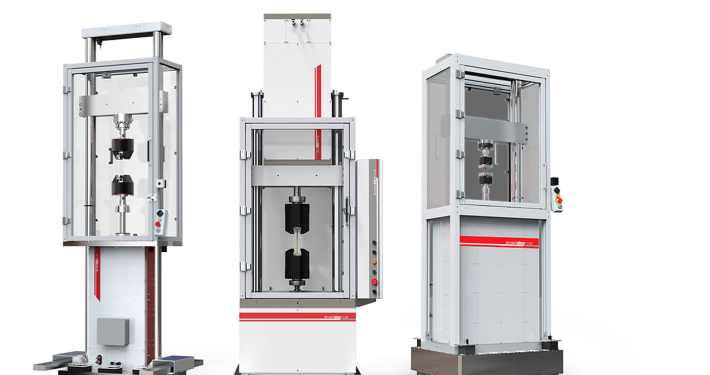
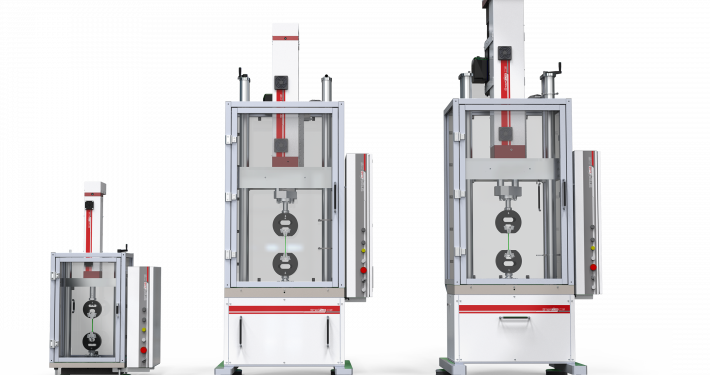
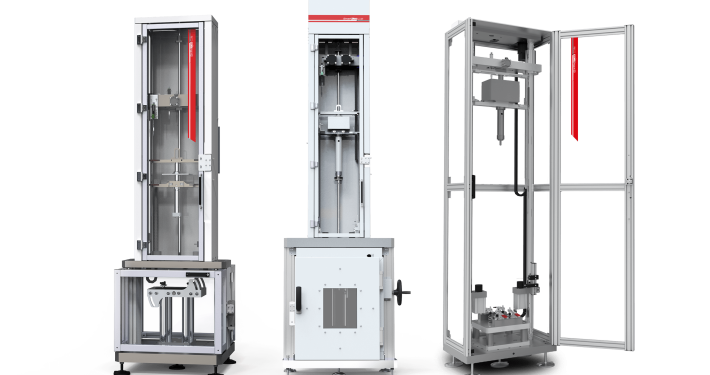
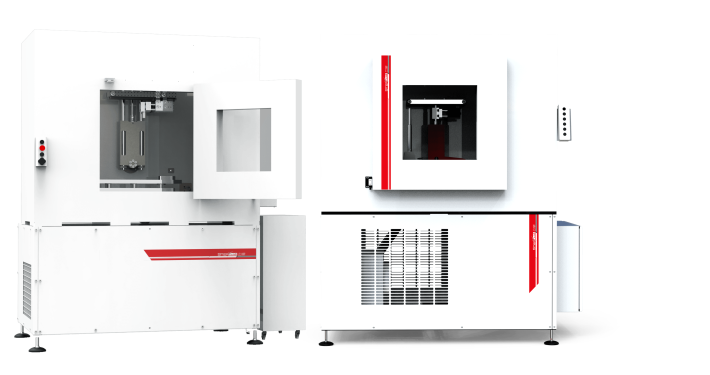
In all three solutions, the load is measured using a piezoelectric load cell. However, deformation cannot be measured using a conventional extensometer at the speeds involved; for this reason, high-speed imaging is used in combination with DIC (Digital Image Correlation) analysis.
Hardware and software used
- Photron high-speed camera (NOVA series): 1024 x 1024 px at 16,000 fps; up to 100,000 fps at 384 x 256 px; up to 300,000 fps at 128 x 128 px
- Alpha by X-Sight DIC analysis software: extracts strain data from a sequence of images, with non-contact displacement measurements in 2D and 3D
The point of impact on the test specimen must be well lit (using dedicated LED lights) to ensure good image quality and, consequently, the quality of the analysis.
How the processing works
During the test, two data streams are acquired in parallel, synchronised via the test controller: the load signal and the high-speed video. The video is converted into individual frames for DIC analysis, which tracks a point (subset) in the image and follows it throughout the entire sequence, deriving strain data (true or engineering strain) for each point on the specimen. By combining load and strain, the material’s stress-strain curve is plotted at the selected test speed.